Last Updated on March 26, 2026 by Admin
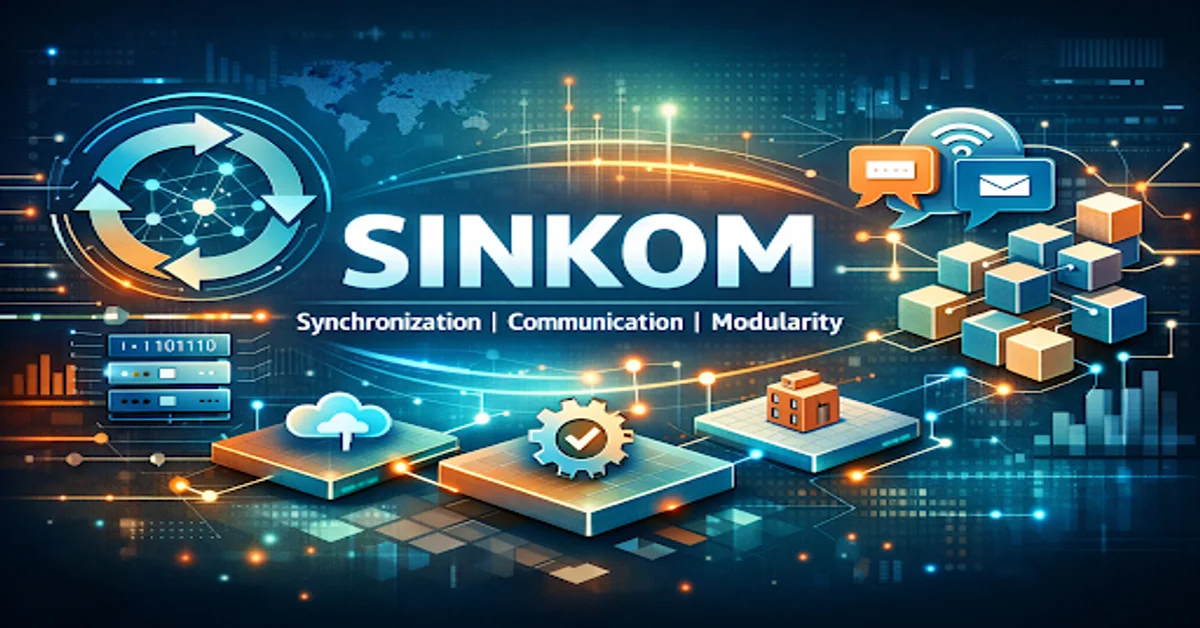
Sinkom is a modern concept that blends ideas of synchronization, communication, and modularity into a single practical approach for designing connected systems. At its core, Sinkom describes architectures and workflows where components — whether software modules, teams, or devices — remain synchronized and communicate seamlessly so the whole behaves like a single, adaptive organism. This concept is particularly useful for organizations tackling real-time coordination and integration across diverse tools.
Understanding Sinkom matters because businesses increasingly rely on connected ecosystems and integration platforms to move faster, reduce friction, and scale digital services. Embracing Sinkom principles helps organizations cut down miscommunication, speed up automation, and build modular systems that can evolve with changing needs — a powerful advantage in the era of digital transformation.
Practically, Sinkom shows up in integration platforms, workflow automation, and real-time collaboration tools. Conceptually, it provides a unifying philosophy: design for synchronization, prioritize strong communication systems, and break problems into modular parts that interoperate cleanly. This combination supports adaptive systems that are resilient, efficient, and future-ready.
RELATED: Kibard: Understanding the Typo, Technology, and SEO
Origins and Meaning of Sinkom
Etymology and historical context
The name Sinkom reads like a portmanteau — sync (synchronization) + comm (communication) — and effectively captures the framework’s emphasis on aligned processes and clear information flows. While not a formal academic term with a single origin story, Sinkom gained traction as practitioners and writers used it to describe integrated, modular approaches to systems and workflows in the 2020s.
How Sinkom evolved as a concept
Sinkom evolved from longstanding engineering practices — process synchronization, modular design, and interoperability — but reframed them for a hybrid, cloud-first world. As organizations adopted microservices, low-code integration platforms, and real-time collaboration, the need for an accessible, applied label for “synchronized, communicative modular systems” grew, and Sinkom filled that gap.
Why it’s gaining attention in tech and business
Businesses are under pressure to deliver faster, maintain flexibility, and reduce the friction of cross-team work. Sinkom’s appeal is practical: it translates abstract principles like interoperability standards and modularity into concrete design and operational choices that drive efficiency and measurable outcomes.
Core Principles of Sinkom
Synchronization – keeping systems and processes aligned
Synchronization in Sinkom means coordinating state, data, and behavior across multiple components so that they operate coherently. In computing, synchronization prevents conflicting updates and ensures consistent behavior; in organizations, it improves alignment across teams and tools. In both cases, synchronization reduces errors and enables smoother, predictable operations.
Synchronization is implemented with patterns and tooling: event streams, message queues, distributed locks, and transactional workflows. The practical effect is that changes in one module propagate in a controlled, reliable way so the system remains in step.
Communication – seamless flow of information
Clear communication systems are the lifeblood of Sinkom. These systems include APIs, message buses, notifications, and standardized data schemas that let components exchange meaning without translation errors. Good communication systems reduce latency between intent and action — for example, an order placed in one system triggers inventory updates and downstream processing automatically.
When communication is engineered carefully, human teams and software modules alike can react to the same signals and make coordinated decisions, improving responsiveness and reducing duplicated work.
Modularity – flexible and adaptable components
Modularity encourages breaking systems into self-contained, replaceable parts that do one thing well. Each module has clear interfaces and responsibilities, making it easier to test, update, and scale individual pieces without risking system collapse. Modularity empowers teams to innovate and iterate fast because changes are localized to components with well-defined boundaries.
Modular architecture also supports reusable building blocks and reduces technical debt, because teams can swap or upgrade modules without a full rewrite.
Interoperability – integrating diverse tools and platforms
Interoperability is about letting heterogeneous systems “speak the same language” using standards, protocols, and agreed data formats so they can share functionality and data with minimal manual intervention. This principle is essential for Sinkom: without interoperability, modular systems and synchronization break down into brittle point-to-point integrations. Industry leaders emphasize standards-based interoperability to enable secure, efficient data exchange across healthcare, finance, and government systems.
Interoperability is achieved through APIs, standards (e.g., REST, gRPC, OpenAPI), middleware, and governance that ensure components remain compatible over time.
How Sinkom Works in Practice
Digital Integration and Collaboration Platforms
Integration platforms (iPaaS) and collaboration tools operationalize Sinkom by providing a shared backbone for data movement and process orchestration. These platforms handle authentication, routing, transformation, and error handling so individual teams use standardized mechanisms to connect tools. They make connected ecosystems possible by abstracting the complexity of point-to-point integrations and enforcing common practices.
When organizations adopt these platforms, they reduce latency between actions and outcomes, enabling rapid iteration and dependable cross-system workflows.
Workflow Automation Using Sinkom Principles
Workflow automation is the hands-on application of Sinkom: repeatable tasks are modeled, conditionals are codified, and actions are triggered automatically when events occur. Business process automation increases throughput and reduces human error by leveraging synchronized triggers and modular process steps. Effective automation uses clear communication channels, standardized data, and modular process components to adapt to changing conditions.
Automation frees teams to focus on higher-value work while routine operations run efficiently and reliably.
Real-Time Coordination in Teams and Systems
Sinkom enables real-time coordination by combining event-driven design, notification systems, and consistent state models. When a system pushes real-time events (e.g., status updates, sensor data, or collaboration signals), downstream modules and people can react immediately. This level of responsiveness is invaluable for operations like incident response, live editing in collaboration tools, or inventory updates in logistics.
Real-time coordination reduces time-to-action and leads to smarter, more proactive decision-making across the organization.
Examples from Tech and Business Environments
Examples of Sinkom in the wild include microservices architectures tied together with message brokers, supply-chain platforms that synchronize inventory and delivery systems, and creative workflows where asset updates automatically notify distributed teams. Enterprises use integration platforms to stitch CRM, ERP, and e-commerce systems into synchronized pipelines — delivering better customer experiences and faster internal workflows.
Each example demonstrates how Sinkom’s mix of synchronization, communication systems, modularity, and interoperability produces measurable business benefits.
Benefits of Adopting Sinkom
Increased efficiency and productivity
By removing manual handoffs and automating predictable flows, Sinkom reduces friction and accelerates outcomes. Teams can operate on a unified, synchronized view of data, which minimizes rework and streamlines handoffs.
Reduced errors and miscommunication
Standardized communication systems and synchronized state reduce the risk of conflicting information and missed updates. With consistent data and automated validation, organizations minimize costly mistakes and improve reliability.
Enhanced adaptability and modularity
Modular components allow targeted improvements and experimentation without destabilizing the entire system. This adaptability reduces time-to-market for new features and lets teams adopt new technologies gradually.
Streamlined workflows across teams and tools
Sinkom encourages connecting tools through integration platforms and clear interfaces, so cross-team workflows flow smoothly. This leads to better collaboration, faster resolutions, and a stronger alignment between technical and business goals.
Sinkom Use Cases Across Industries
Software Development and IT
In software development, Sinkom principles help teams build microservices that communicate reliably, use common authentication and monitoring, and coordinate deployments with CI/CD pipelines. Synchronization and modularity reduce merge conflicts and deployment errors, while interoperability makes third-party integrations straightforward.
Remote Work and Collaborative Platforms
Remote teams rely on real-time collaboration tools and communication systems that follow Sinkom principles. Shared documents, live presence, and integrated task boards synchronize work and reduce the cognitive load of tracking multiple updates, making remote work more efficient and engaging.
Logistics and Supply Chain Management
Logistics require exacting synchronization between inventory, carriers, and order management. Sinkom-style integration platforms enable real-time tracking, automated reordering, and predictable deliveries — critical for customer satisfaction and operational resilience.
Creative and Event Management Systems
Creative workflows and event operations benefit from modular asset systems and synchronized schedules. When content updates automatically propagate to publishing queues and event schedules, teams can focus on creativity while the platform handles coordination.
Challenges and Misconceptions
Common misunderstandings about Sinkom
Some think Sinkom is a single product or tool; in reality, it’s a philosophy and set of design choices. Another misconception is that synchronization always means “locking everything” — good Sinkom designs are selective and efficient about what must be synchronized.
Limitations in implementation
Implementing Sinkom requires cultural change, governance, and upfront investment in integration platforms, standards, and testing. Poorly designed synchronization can create bottlenecks; excessive coupling undermines modularity.
How to overcome obstacles in adoption
Start with clear priorities: map the most valuable workflows, choose standards-based integration tools, and design modular components with clear APIs. Invest in monitoring and observability so synchronization issues are quickly detected and resolved.
Comparing Sinkom to Traditional Systems
Differences between Sinkom and conventional communication models
Traditional systems often rely on brittle point-to-point integrations and manual coordination. Sinkom emphasizes standard interfaces, event-driven synchronization, and modular components that reduce tight coupling and make evolution easier.
Why organizations are shifting to Sinkom-inspired frameworks
Organizations shift because Sinkom reduces time-to-delivery, improves operational resilience, and supports modern digital transformation strategies. Firms that adopt these principles can scale more gracefully and adapt faster to shifting market needs.
Examples highlighting the advantages
A legacy system with dozens of custom integrations is costly to maintain; refactoring into modular services connected via an integration platform simplifies maintenance, enables parallel development, and makes the system more reliable.
Future Trends and Innovations
Emerging technologies aligned with Sinkom principles
Artificial intelligence, event-driven architectures, distributed ledger technologies, and low-code integration platforms all increase the reach of Sinkom by making synchronization, interoperability, and modular orchestration simpler to implement.
Predictions for digital integration and modular workflows
Expect more automation of integration tasks, richer observability across connected ecosystems, and stronger interoperability standards that reduce translation overhead between systems. Organizations will increasingly use policy-driven integration and AI-assisted orchestration to manage complexity.
How Sinkom might shape future business strategies
Sinkom will push organizations to treat connections and data flows as strategic assets. Businesses that master synchronized, interoperable ecosystems will move faster, personalize experiences better, and sustain continuous innovation with lower operational risk.
Summary
Sinkom is a practical guide to building synchronized, communicative, modular systems that interoperate reliably. Its core principles — synchronization, communication systems, modularity, and interoperability — equip organizations to deliver consistent, efficient results.
Start small: identify a high-value workflow, pick an integration platform, and modularize a single component. Measure outcomes and iterate. Over time, these wins compound into robust, adaptive ecosystems.
As digital transformation accelerates, Sinkom will remain a useful lens for architects and leaders aiming to build resilient, integrated systems. When applied thoughtfully, it’s less a buzzword and more a blueprint for operational excellence.
RELATED: Valplekar: The Ultimate Puppy Socialization Guide
Frequently Asked Questions
What does Sinkom mean?
Sinkom refers to a practical framework emphasizing synchronization, communication, modularity, and interoperability to create connected, adaptive systems.
How can Sinkom improve team communication?
By standardizing communication systems (APIs, message buses) and synchronizing state across tools, Sinkom reduces ambiguity, shortens feedback loops, and aligns human and technical workflows.
Is Sinkom applicable outside tech industries?
Yes — any sector that relies on coordinated data and processes (logistics, healthcare, events, education) benefits from Sinkom principles.
What are the first steps to implement Sinkom?
Map high-value workflows, adopt standards-based integration platforms, modularize components with clear interfaces, and add observability to monitor synchronized flows.