Last Updated on March 3, 2026 by Admin
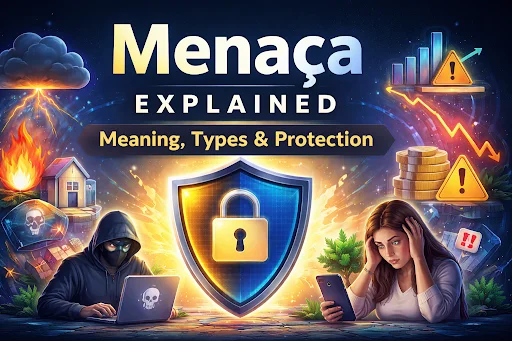
Menaça is a concept that touches every part of modern life — personal safety, digital security, business continuity, and global stability. This article delivers a friendly yet expert-led explanation of what menaça means, why it matters, and how individuals, organizations, and nations can respond smartly and proactively.
We’ll use research-based insights, practical examples, and clear action steps to help you feel empowered — not alarmed. Expect trustworthy guidance, positive framing, and concrete tools so you can recognize and reduce threats in everyday life.
Menaça is a word used in Portuguese and some related languages to describe something that poses a threat, a menace, or a potential harm. At its core, menaça is about possibilities — an event or condition that could cause negative outcomes if not anticipated or managed.
This term spans many domains: a physical menaça (like a wildfire), a digital menaça (like a data breach), or a social menaça (like bullying). Understanding the variety of menaça helps you match the right response to the right situation.
Understanding the Meaning
Meaningful comprehension separates vague worry from actionable concern. Menaça includes both immediate dangers and longer-term risks — the immediate harm that may happen and the probability that harm will occur.
Practically, the word prompts two questions: How likely is harm? And how severe would that harm be? Answering these lets individuals and systems prioritize responses efficiently and with calm, decisive planning.
Why Learning About Menaça Is Important Today
We live in a highly connected, fast-paced world where new threats can appear quickly and spread broadly. Learning about menaça equips people to spot early warning signs, reduce panic, and take smart steps that protect what matters most.
Moreover, understanding menaça fosters resilience. When communities and organizations understand threats, they design systems — from emergency plans to cyber defenses — that reduce harm and restore normalcy faster.
Origin and Definition of Menaça
Linguistically, menaça stems from Romance-language roots and has long been used in Portuguese-speaking contexts to denote a threat or danger. Over time, its use expanded to legal, social, and technical fields where precise definitions matter.
In modern usage, menaça is defined as any person, condition, or event that presents a potential cause of harm — whether that harm affects health, safety, assets, reputation, or stability.
Menaça vs Danger vs Risk — Key Differences
Though often used interchangeably, these three terms differ in useful ways. Danger usually refers to an immediate source of harm — a burning building is dangerous. Risk measures the probability and magnitude of harm over time — how likely the fire will spread and how bad the consequences might be. Menaça sits between these terms: it can describe the source and the scenario that leads to risk.
Practically: spotting a menaça helps you decide whether to respond now (danger), to reduce probability (risk mitigation), or to plan for recovery (resilience).
Types of Menaça in Modern Society
Modern societies face layered and overlapping menaça. These include physical incidents (natural disasters), cyber attacks (data theft), social harms (misinformation), environmental crises (climate change), and financial shocks (market collapse). Each type needs different detection tools and responses.
Treating threats as categories helps planners assign specialized resources — medical teams for physical harm, cybersecurity teams for digital menaça, and economic policy for financial risks.
Physical Menaça Explained
Physical menaça are tangible hazards: fires, floods, violent crime, industrial accidents, or infrastructure failures. They are often visible, may escalate quickly, and usually demand immediate safety measures like evacuation or emergency services.
Mitigation includes building codes, community emergency plans, first-aid training, and resilient infrastructure. These strategies reduce both the likelihood and the severity of harm.
Digital and Cyber Menaça
Digital menaça includes data breaches, ransomware attacks, identity theft, and supply-chain intrusions. These threats can be stealthy and widespread, affecting individuals, companies, and critical infrastructure.
Preparing for cyber menaça involves layered defenses: strong authentication, regular backups, patch management, employee training, and incident response playbooks. Cyber hygiene is a daily habit that significantly lowers risk.
Social and Emotional Menaça
Social menaça covers bullying, harassment, organized misinformation, and community polarization — harms that erode mental health, trust, and social cohesion. Emotional menaça can be subtle yet highly damaging over the long term.
Prevention uses education, community support systems, moderator policies on platforms, and mental-health resources. Building compassionate, communicative communities reduces perceived threat and actual harm.
Environmental Menaça
Environmental menaça comes from climate change, pollution, deforestation, and loss of biodiversity — risks that unfold over years but have enormous societal impact. These threats require both mitigation (reducing emissions) and adaptation (flood defenses, heat-resilient cities).
Collaboration between scientists, policymakers, and communities builds solutions that protect livelihoods and ecosystems — turning daunting threats into actionable policy and design changes.
Economic and Financial Menaça
Economic menaça includes inflation, market collapses, unemployment spikes, and supply-chain disruptions. These affect livelihoods and public services and can cascade into social unrest if unmanaged.
Combatting financial menaça requires sound fiscal policy, economic diversification, social safety nets, and contingency planning at both corporate and national levels.
How Menaça Affects Human Psychology
Perceived menaça often matters more than objective risk. When people feel threatened, their cognitive focus narrows, prioritizing immediate safety over long-term planning. That’s adaptive in crisis, but prolonged threat perception can harm mental and physical health.
Experts recommend accurate information, clear action steps, and social support to reduce chronic stress. Transparent communication from authorities and organizations calms fear and encourages constructive behavior.
Fear Response and Stress Reactions
The body’s fight-or-flight response is a powerful, automatic reaction to perceived threat. Short bursts of stress sharpen focus; chronic stress impairs immune function, decision-making, and long-term wellbeing.
Coping strategies include breath techniques, structured routines, social connection, and professional mental-health support. Recognizing the stress response helps people choose responses that protect both immediate safety and long-term resilience.
Social Behavior Under Menaça
Under threat, communities can either fracture or come together. Social cohesion, trust in institutions, and equitable access to resources determine which path unfolds. Leaders who act decisively and fairly see more cooperative behavior from the public.
Community drills, clear guidance, and fair resource distribution strengthen social bonds and increase overall safety during threats.
Menaça in Technology and Security — Cybersecurity Threats as Modern Menaça
Cybersecurity has become a frontline defense against modern menaça — from individual identity theft to attacks on national infrastructure. Regular vulnerability scanning, incident response training, and resilient system architectures reduce exposure and speed recovery.
Businesses and governments must invest in both prevention and recovery; backups, segmentation, and clear legal frameworks make systems less fragile when attacks occur.
AI and Future Security Challenges
Artificial intelligence promises powerful detection tools (pattern recognition, anomaly detection) but also introduces new threats: automated misinformation, deepfakes, and novel attack vectors. Balancing innovation with safeguards will be crucial.
Developing ethical AI, rigorous testing, and cross-sector partnerships allows society to leverage AI’s benefits while limiting misuse. Transparency and ongoing oversight strengthen public trust in AI-driven systems.
Role of Governments and Global Organizations
Governments, international institutions, and law-enforcement networks play central roles in identifying, coordinating, and mitigating menaça that cross borders or require pooled resources. Agencies contribute expertise, share intelligence, and set standards. For global security threats, organizations such as North Atlantic Treaty Organization coordinate defense and deterrence measures among member states.
For peacekeeping, humanitarian coordination, and global safety, the United Nations provides norms, guidance, and operational support. In law enforcement and transnational crime prevention, INTERPOL facilitates cooperation and intelligence sharing. Together, these organizations amplify capacity and foster international collaboration against complex threats.
Real-World Cases of Menaça Situations
Case studies help translate abstract concepts into practical lessons. Consider a ransomware attack on a hospital: the menaça begins as a cyber intrusion but quickly becomes a risk to patient care and public safety. Rapid detection, backups, and cross-team coordination restore services and reduce harm.
Another example is a city facing seasonal flooding. Early-warning systems, timely evacuations, and resilient infrastructure reduce fatalities and economic loss. Both cases show how preparedness turns potential catastrophe into manageable challenge.
Workplace Menaça and Safety Awareness
Workplace menaça includes harassment, theft, accidental injuries, and data breaches. Comprehensive safety programs combine physical security, clear policies, employee training, and reporting channels.
Cultivating a safety-first culture encourages early reporting and swift remedies. Small investments—like emergency drills and secure access controls—deliver outsized benefits in preventing harm.
Online Menaça and Social Media Risks
Online menaça ranges from doxxing and cyberbullying to targeted scams and influence operations. These harms can quickly spread through networks and damage reputations and mental health.
Mitigation involves both individual actions (privacy settings, cautious sharing) and platform-level measures (content moderation, transparent policies). Digital literacy empowers users to recognize manipulative tactics and protect themselves and their communities.
How to Identify Menaça Early
Spotting menaça early hinges on curiosity, data, and patterns. Look for unusual system behaviors (for digital threats), environmental warning signs (for physical threats), or social cues (for emotional harms). Early detection systems — sensors, monitoring tools, and community reports — are invaluable.
Cultivate habits: maintain situational awareness, verify unusual information, and treat small anomalies as potential indicators. Early, modest actions often prevent larger crises.
Steps to Protect Yourself from Menaça
Start with the basics: secure passwords, emergency contacts, smoke detectors, and savings for financial resilience. Build a simple plan: what to do, who to call, where to go. Practice it.
Layer defenses: combine prevention (education, safety measures) with preparation (backups, insurance) and recovery (legal and mental-health resources). This layered, optimistic approach meaningfully reduces risk.
Risk Management Strategies
Effective risk management follows three steps: identify, assess, and mitigate. Use data to prioritize the most likely and most damaging threats. Assign responsibilities and rehearse responses regularly.
At organizational levels, formal frameworks (risk registers, incident playbooks, continuous improvement loops) make responses repeatable and scalable. For individuals, small consistent habits—like updating software and staying informed—deliver strong protection.
Legal Definition of Threats and Menaça
Legal systems define threats differently depending on context: criminal law often treats explicit threats of violence as offenses, while regulatory frameworks classify certain cyber activities or environmental harms as statutory violations. Clear legal definitions enable enforcement and redress.
Legal remedies protect victims and deter perpetrators. Understanding applicable laws—privacy, workplace safety, criminal statutes—helps individuals and organizations pursue appropriate action when faced with menaça.
Human Rights and Safety Protection
Safety measures must respect human rights and due process. Effective threat reduction balances protection with privacy, freedom of speech, and fairness. Laws and policies that prioritize transparency, proportionality, and oversight build public trust.
Human-rights-focused approaches also expand protection to vulnerable groups, ensuring that security strategies are equitable and inclusive.
Future of Threat Detection Technology
Emerging sensors, improved data analytics, and AI-driven pattern recognition are transforming how we detect threats. These technologies enable earlier warnings, more accurate risk assessments, and automated responses that reduce harm.
However, technology is not a silver bullet; it must be combined with human judgment, community engagement, and ethical governance to deliver sustainable safety improvements.
AI-Based Menaça Monitoring Systems
AI systems can flag anomalous behavior (network intrusions, suspicious transactions, environmental irregularities) faster than humans alone. When designed transparently and tested rigorously, they can provide significant advantages in early detection and prioritization.
Responsible deployment includes human oversight, clear accountability, bias testing, and privacy safeguards so AI augments human decision-making without eroding rights.
Frequently Asked Questions
What is the meaning of “menaça”?
Menaça is a Portuguese term for a threat or menace — any person, condition, or event that could cause harm. It encompasses both immediate dangers and future risks.
How is menaça different from danger or risk?
Danger is an immediate source of harm, risk measures the likelihood and impact over time, and menaça describes the scenario or source that links the two.
What are common modern types of menaça?
Physical hazards, cyber attacks, social/emotional harms, environmental crises, and economic shocks are common categories.
How can individuals protect themselves from menaça?
Use layered defenses: secure digital practices, emergency plans, community awareness, insurance, and mental-health resources.
What role do international organizations play in handling menaça?
They coordinate resources, share intelligence, set norms, and provide operational support for cross-border threats. Examples include major security and law-enforcement bodies.
Summary
Menaça is a versatile, action-oriented concept that captures sources of potential harm across physical, digital, social, environmental, and economic domains. Understanding it empowers people and institutions to detect early, mitigate risk, and recover with resilience.
By combining practical steps (prevention, preparedness, and recovery), trustworthy institutions (local authorities and international organizations), and modern technology (cybersecurity and AI), societies can turn threats into manageable challenges and create safer, more optimistic futures.
Stay curious, stay prepared, and invest in relationships and systems that multiply your resilience. Small daily actions — secure passwords, a first-aid kit, clear communication channels — create durable safety. When communities and institutions act together with transparency and compassion, menaça loses its power and people reclaim confidence.
Stay tuned with Tech Knot!