Last Updated on March 17, 2026 by Admin
Kleptotoxicity is one of nature’s most fascinating survival strategies, a clever mechanism in which organisms borrow chemical defenses from their environment or diet rather than producing toxins internally. The term comes from “klepto,” meaning theft, and “toxicity,” referring to harmful chemical compounds. In essence, certain creatures “steal” toxic compounds from plants, prey, or symbiotic partners and use them as a personal shield against predators. This strategy allows small and seemingly fragile organisms to survive in environments where predation pressures are high.
Unlike organisms that synthesize their own toxins, kleptotoxic species capitalize on pre-existing chemical armor, turning it into a protective tool without investing heavily in metabolic energy. This makes Kleptotoxicity a highly efficient and adaptive survival strategy. It demonstrates how evolution often favors ingenuity and resourcefulness over brute force.
Kleptotoxicity plays a crucial role in shaping predator-prey dynamics and broader ecological systems. By accumulating toxic compounds, prey species gain a defensive advantage that reduces predation, influencing predator behavior and feeding patterns. Over time, this alters population balance and promotes biodiversity by providing alternative niches for less-defended organisms.
Additionally, Kleptotoxicity encourages co-evolutionary innovations, as predators adapt to overcome chemical defenses while prey species refine their sequestration abilities. This dynamic interaction highlights the interconnectedness of ecosystems and underscores the importance of chemical defense strategies in ecological survival.
RELATED: CVhatGPT: The Future of AI Innovation
The Science Behind Kleptotoxicity
How Organisms Sequester Toxins
Kleptotoxic species have evolved specialized mechanisms to capture, transport, and store toxic compounds safely. These mechanisms vary between species but typically involve selective absorption pathways that filter and retain only beneficial toxins. This selective sequestration ensures that organisms maximize defensive value while minimizing metabolic risk.
For example, insects feeding on toxic plants, amphibians consuming alkaloid-rich prey, and marine invertebrates harvesting bioactive compounds from sponges or algae all demonstrate precision in toxin uptake. This strategy transforms ordinary feeding behaviors into a sophisticated survival toolkit.
Biochemical Mechanisms for Safe Storage
Storing toxins internally requires intricate biochemical adaptation. Organisms often employ binding proteins, storage vesicles, and compartmentalized tissues to isolate toxins from sensitive cellular machinery. This prevents self-poisoning, a critical risk for kleptotoxic species. In some cases, organisms even chemically modify absorbed toxins to reduce self-toxicity while retaining potency against predators.
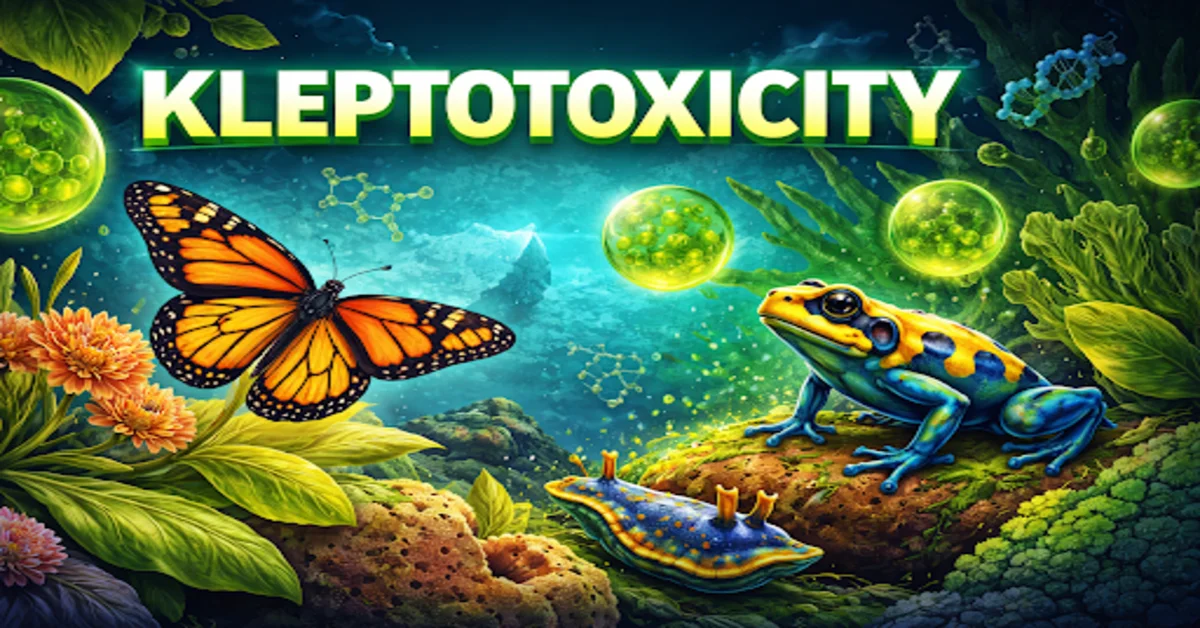
For instance, Poison Dart Frogs safely store alkaloids in skin glands, while Monarch Butterflies incorporate cardiac glycosides from the Milkweed Plant into their tissues without harming themselves. Such adaptations showcase nature’s precision engineering in balancing danger and defense.
Role of Enzymes and Transport Systems in Selective Absorption
Enzymes act as biological gatekeepers, ensuring that only target compounds are absorbed and retained. Specialized transport proteins in cell membranes and tissues act like biochemical customs officers, directing molecules to storage compartments while excluding harmful or irrelevant substances. These processes illustrate the intricate interplay between biochemistry and evolutionary adaptation, optimizing survival outcomes in high-risk ecological niches.
Pathways of Kleptotoxicity Acquisition
Dietary Sequestration: How Prey and Plants Provide Toxins
Dietary sequestration is one of the most widespread pathways for Kleptotoxicity. Many insects, amphibians, and marine species consume toxic prey or plants and retain specific compounds in their bodies for defense. The process is highly selective, ensuring that only molecules beneficial for chemical defense are sequestered.
Monarch Butterflies provide a classic example. Caterpillars feed on Milkweed Plants, which contain cardiac glycosides. These toxins accumulate in the butterflies’ bodies, making them unpalatable to predators. Similarly, Poison Dart Frogs acquire alkaloids from consuming toxic arthropods, turning their diet into a potent chemical shield.
Symbiotic Chemical Defense: Partnerships with Microbes and Algae
Kleptotoxicity also arises through symbiotic relationships, where toxin-producing microbes or algae provide chemical defense to a host organism. In this arrangement, the host benefits from protection while supplying nutrients and shelter to the symbionts.
This strategy is often observed in marine ecosystems, where invertebrates like Sea Slugs host toxin-producing algae or bacteria. These partnerships exemplify defensive symbiosis, a form of ecological collaboration where survival depends on shared biochemical resources.
Environmental Uptake: Absorbing Toxins from Water and Surroundings
In aquatic ecosystems, some organisms absorb toxins directly from the surrounding environment. This environmental uptake allows species to exploit dissolved bioactive compounds from sponges, algae, or waterborne chemical signals. This pathway demonstrates how Kleptotoxicity is not limited to dietary sources but can extend to exploiting the chemical richness of habitats.
Examples of Kleptotoxicity in Nature
Monarch Butterflies and Milkweed Toxins
The Monarch Butterfly is a textbook example of dietary toxin sequestration. Caterpillars consume Milkweed Plants, which are rich in cardiac glycosides. These compounds make adult butterflies toxic to predators. The butterflies’ bright coloration acts as a warning signal, or aposematism, ensuring that predators recognize and avoid them. This combination of chemical defense and visual signaling highlights the efficiency of Kleptotoxicity in survival strategies.
Poison Dart Frogs and Dietary Alkaloids
Poison Dart Frogs acquire their alkaloid toxins from consuming specific arthropods in their natural habitats. These alkaloids are stored in skin glands, creating a potent defense against predation. The frogs’ vivid coloration serves as a visual deterrent, reinforcing the chemical warning system. This dual strategy demonstrates how Kleptotoxicity integrates with predator deterrence mechanisms in evolutionarily optimized ways.
Marine Examples: Sea Slugs and Sponges
In marine ecosystems, Sea Slugs exploit toxin sequestration from sponges and other prey organisms. These toxins are stored in specialized tissues, providing defense against predators. Some species even use sequestered compounds to produce their own bioactive compounds, which are critical for chemical defense and interspecies interactions. These examples illustrate the versatility of Kleptotoxicity in diverse ecological niches.
Insects and Other Small Prey Species
Many insects and small prey species utilize Kleptotoxicity for survival. By selectively sequestering toxins from their diet, these organisms create natural chemical armor against predators. This strategy allows otherwise vulnerable species to survive in predator-rich environments, contributing to ecological balance and toxicity regulation within ecosystems.
Evolutionary Advantages of Kleptotoxicity
Energy Efficiency Compared to Internal Toxin Production
Producing toxins internally is metabolically expensive. Kleptotoxicity offers a highly energy-efficient alternative, allowing organisms to redirect energy toward growth, reproduction, and mobility. By borrowing pre-existing chemical defenses, species avoid the metabolic cost of toxin production, gaining survival advantages without compromising fitness.
Flexibility and Adaptability in Changing Environments
Kleptotoxic species can adapt their chemical defenses based on diet, symbiotic partners, or environmental availability of toxins. This flexibility enables rapid responses to changes in predator pressure or habitat, providing a dynamic buffer against ecological challenges. In evolutionary terms, this adaptability increases the likelihood of species persistence over generations.
Contribution to Survival and Reproductive Success
By improving survival odds, Kleptotoxicity indirectly enhances reproductive success. Species with chemical defenses are less likely to be predated, giving them more opportunities to reproduce and pass on traits. Over time, this leads to the natural selection of efficient sequestration mechanisms, reinforcing the evolutionary advantage of toxin borrowing.
Kleptotoxicity in Predator-Prey Dynamics
How Chemical Defenses Affect Predator Behavior
Kleptotoxicity profoundly influences predator-prey dynamics. Predators learn to avoid prey that are toxic or distasteful, shifting feeding patterns and reducing predation pressure. This dynamic interaction also encourages predators to evolve detoxification abilities or avoidance behaviors, highlighting a continuous chemical arms race in ecosystems.
Mimicry and Warning Signals (Aposematism)
Many kleptotoxic species combine chemical defense with aposematic coloration, a visual warning to predators. Bright patterns or contrasting colors signal toxicity, helping predators associate appearance with danger. Mimicry often extends these benefits to non-toxic species, creating community-wide protective effects.
Impact on Population Stability and Ecosystem Balance
By altering predator feeding habits, Kleptotoxicity contributes to population stability. Predators may target alternative prey, affecting energy flow and species interactions. This subtle regulation of ecological networks underscores the importance of Kleptotoxicity in maintaining ecosystem balance and biodiversity.
Risks, Trade-Offs, and Limitations
Danger of Self-Poisoning
Storing potent toxins carries inherent risks. Even with specialized tissues and binding proteins, accidental release or metabolic disruption can lead to self-harm. Organisms must carefully regulate toxin concentration to avoid internal toxicity, highlighting the precision required for Kleptotoxicity to function effectively.
Dependence on Specific Food Sources or Symbionts
Kleptotoxicity often relies on particular diets or symbiotic partners. Disruption of these sources can compromise defense mechanisms, leaving organisms vulnerable. Evolution favors backup strategies, such as behavioral avoidance or alternative chemical pathways, to mitigate this dependency.
Energetic and Physiological Costs of Storing Toxins
Maintaining sequestration systems, storage tissues, and detoxification enzymes requires energy. While Kleptotoxicity reduces the metabolic costs of producing toxins internally, these maintenance costs are non-negligible. Overall, survival benefits generally outweigh costs, but trade-offs remain central to the strategy’s ecological viability.
Kleptotoxicity’s Role in Ecological and Evolutionary Research
Insights into Chemical Ecology and Species Interactions
Studying Kleptotoxicity provides profound insights into chemical ecology. It reveals how organisms interact with predators, prey, and symbiotic partners through chemical signals, shaping ecosystems in complex ways. Researchers gain a better understanding of toxin dynamics, ecological adaptation, and defensive strategies by observing kleptotoxic species in nature.
Influence on Co-Evolutionary Arms Races
Kleptotoxicity drives co-evolutionary interactions. Predators may evolve resistance or avoidance behaviors, prompting prey to refine their sequestration or toxicity. This Evolutionary Arms Race promotes species diversification and specialization, demonstrating the evolutionary significance of chemical defense strategies.
Lessons for Studying Bioaccumulation and Environmental Toxins
Kleptotoxicity offers a natural model for understanding bioaccumulation and environmental toxin movement. Observing how organisms manage toxic compounds provides insights into pollutant behavior, risk assessment, and environmental safety, bridging ecological science with applied human health studies.
Applications and Implications for Humans
Relevance to Pharmacology and Drug Discovery
Many sequestered natural compounds possess potent bioactive properties, inspiring pharmacological research. Understanding how organisms safely handle toxins can guide drug development, detoxification strategies, and therapeutic innovation, translating ecological lessons into human benefits.
Lessons for Toxicology and Environmental Safety
Studying Kleptotoxicity helps scientists understand toxin persistence, movement through food webs, and environmental impact. These insights inform regulatory frameworks, chemical safety measures, and ecological monitoring, emphasizing the real-world applications of this natural strategy.
Inspiration from Natural Chemical Strategies
Kleptotoxicity illustrates nature’s ingenuity in chemical engineering, inspiring biomimetic designs in medicine, materials science, and environmental management. Borrowing ideas from ecological solutions demonstrates the power of observing, understanding, and applying nature’s strategies.
Common Misconceptions About Kleptotoxicity
It’s Not Reckless Toxin Accumulation
Contrary to some beliefs, Kleptotoxicity is highly selective. Organisms capture only compounds that provide defensive value, avoiding indiscriminate toxin accumulation. Precision is key to survival and illustrates the sophisticated regulation behind this strategy.
Kleptotoxicity is Widespread, Not Rare
While the term may be unfamiliar, Kleptotoxicity occurs across diverse taxa, from insects to marine invertebrates. Recognizing these patterns reveals hidden survival strategies that pervade ecological systems worldwide.
Borrowed Toxins Do Not Guarantee Total Predator Immunity
Kleptotoxicity increases survival odds but does not make prey invincible. Predators may evolve resistance, and environmental variability may reduce chemical effectiveness. This dynamic underscores the probabilistic nature of survival in ecosystems.
RELATED: HDHubFU: Truth, Risks & Streaming Guide
Frequently Asked Questions
What is Kleptotoxicity in simple terms?
Kleptotoxicity is when an organism borrows toxins from its environment or diet to defend itself against predators, instead of producing toxins internally.
Which species are known for Kleptotoxicity?
Examples include Monarch Butterflies (Milkweed toxins), Poison Dart Frogs (alkaloids), and Sea Slugs (toxin sequestration from sponges).
How does Kleptotoxicity benefit survival?
It provides a chemical shield, deters predators, saves energy compared to toxin production, and allows flexibility in changing environments.
Can Kleptotoxicity harm the organism itself?
Yes. Specialized storage systems are needed to prevent self-poisoning, and mismanagement of toxins can be dangerous.
How does Kleptotoxicity affect ecosystems?
It influences predator-prey dynamics, population stability, mimicry, and chemical communication, contributing to overall ecological balance.
Summary
Kleptotoxicity demonstrates nature’s ingenuity and efficiency, showing how organisms leverage existing resources for survival. By borrowing chemical defenses, species gain flexibility, reduce metabolic costs, and maintain dynamic survival strategies in predator-rich environments.
This remarkable adaptation highlights the importance of chemical ecology, predator-prey dynamics, and evolutionary arms races. Understanding Kleptotoxicity deepens our appreciation for ecosystem complexity and inspires innovative approaches in pharmacology, toxicology, and biomimicry. Ultimately, it teaches that survival often favors creativity, adaptability, and balance over sheer force—a timeless lesson from the natural world.